
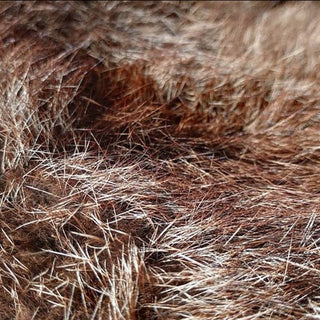
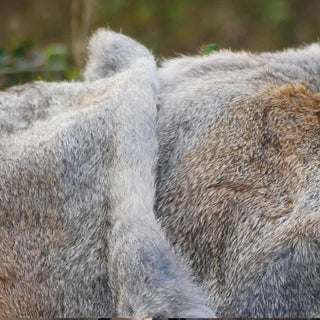
The Fur On Hide Working Weekend offers a rare opportunity to learn one of humanity’s oldest and most intimate crafts: the transformation of a raw animal pelt into a supple, durable, and beautiful material. Guided by the Woodland Ways instructional team, participants are introduced to traditional hide-working techniques informed by decades of field experience and ethnographic knowledge.
This course is rooted in respect, responsibility, and understanding. Participants learn not only how to work fur-on hides, but why certain methods have endured across cultures and environments. Every stage of the process is explored carefully, allowing participants to develop confidence, sensitivity, and skill.
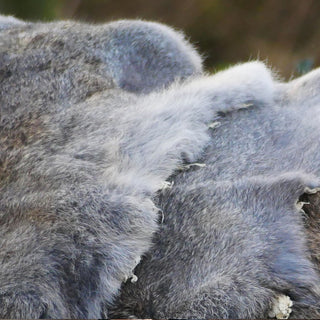
By the end of the weekend, participants leave with their own traditionally tanned fur-on pelt and a clear understanding of the full process—from green hide to finished material—along with the knowledge to repeat it independently.
All animals used on the course have been humanely and sustainably sourced, either through ethical culling or carefully selected roadkill. In keeping with Woodland Ways’ values, the course emphasises full utilisation of the animal, minimising waste and honouring the life taken.




OPTION 1:
Buy this course as a gift voucher for someone else. Valid for 18 months.
BUY GIFT VOUCHER
OPTION 2:
Choose the number of places, pay a deposit now and the balance 8 weeks before the course starts or pay in full now.
Select from the dates below.
The Fur On Hide Working Weekend offers a rare opportunity to learn one of humanity’s oldest and most intimate crafts: the transformation of a raw animal pelt into a supple, durable, and beautiful material. Guided by the Woodland Ways instructional team, participants are introduced to traditional hide-working techniques informed by decades of field experience and ethnographic knowledge.
This course is rooted in respect, responsibility, and understanding. Participants learn not only how to work fur-on hides, but why certain methods have endured across cultures and environments. Every stage of the process is explored carefully, allowing participants to develop confidence, sensitivity, and skill.
By the end of the weekend, participants leave with their own traditionally tanned fur-on pelt and a clear understanding of the full process—from green hide to finished material—along with the knowledge to repeat it independently.
All animals used on the course have been humanely and sustainably sourced, either through ethical culling or carefully selected roadkill. In keeping with Woodland Ways’ values, the course emphasises full utilisation of the animal, minimising waste and honouring the life taken.
Fur on Hide Working Weekend
Fur on Hide Working Weekend
Fur on Hide Working Weekend
Fur on Hide Working Weekend
Fur on Hide Working Weekend
Fur on Hide Working Weekend
Skinning and Understanding the Animal
The course begins at 13:00 on Friday afternoon, allowing time for participants to settle into camp and set up their sleeping arrangements before a site orientation and course briefing.
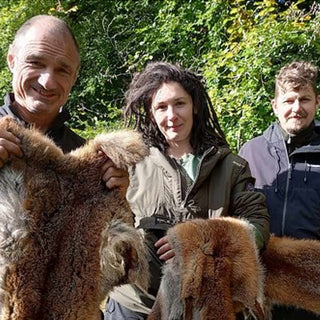
Instruction then moves into the first critical stage: skinning. Instructors demonstrate techniques designed to maximise the quality and usability of the pelt, explaining the reasoning behind each cut and movement. Participants are encouraged to be hands-on, gaining practical experience and confidence with the tools and techniques involved.
This session sets the tone for the weekend—calm, methodical, and respectful—highlighting the importance of working cleanly and thoughtfully at every stage.
After the afternoon’s work, the group breaks for dinner. As evening settles in, participants gather around the campfire for an informal but in-depth discussion exploring the many resources an animal provides, including bone, sinew, and hide. Instructors draw on traditional and indigenous examples to illustrate how nothing was wasted, and how these materials were transformed into tools, clothing, and everyday items.
Transforming Hide into Material
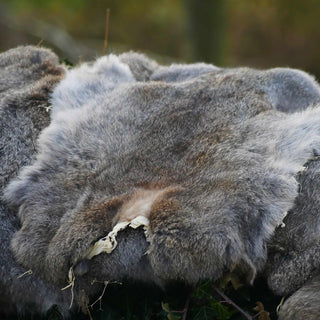
Processes move onto the core processes of hide working. Participants are guided step by step through fleshing, dressing, and softening their pelts, learning how to remove tissue, manage moisture, and work the fibres of the skin to achieve flexibility and strength.
This stage is physically demanding and requires patience and persistence. Instructors are present throughout, offering encouragement, troubleshooting issues, and helping participants understand what the hide is doing at each stage of the process. Subtle changes in texture, resistance, and feel are highlighted, teaching participants to read the material rather than rely solely on instruction.
As daylight fades, the group breaks for dinner and rest. Later, gathered around the fire, instructors lead a detailed discussion on the science and chemistry of tanning, explaining what happens as a hide transitions from raw to preserved. A range of example hides are shared, helping participants visualise and understand the process in its entirety.
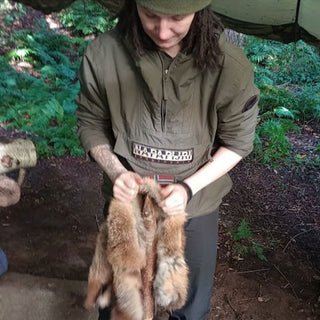
Finishing and Smoking
Sunday morning is dedicated to completing any remaining work needed to achieve a soft, supple finish. This final refinement stage ensures participants understand how to correct stiffness, uneven areas, or incomplete working.
Once hides are fully softened, the course moves into the final and highly significant stage: smoking the hides using traditional methods. Smoking not only improves durability and water resistance but also completes the tanning process, fixing the work already done and imparting a distinctive character to the finished pelt.
Participants learn how and why smoking works, how to manage smoke quality and heat, and how to recognise when a hide has been properly finished.
In Summary
The Fur On Hide Working Weekend provides a deep and rewarding immersion into traditional hide craft. Participants leave with a beautifully finished fur-on pelt, practical experience of every stage of the process, and a respectful understanding of how animals have supported human life through skilled use rather than waste.
This course is ideal for those seeking a meaningful connection to traditional skills, an appreciation of material culture, and the satisfaction of creating something both functional and enduring by hand.