
A Tracker's Odyssey: Bridging Wildlife and Human Sign is a rare and deeply immersive course that brings together two complementary tracking disciplines—wildlife tracking and human tracking—into a single, cohesive learning experience. Led by two highly respected specialists, Kyt Lyn Walken and Mark Sharwood, this course explores the subtle, fascinating overlap between human and animal sign, and why the ability to distinguish between the two is essential to becoming a truly competent tracker.
Tracking is not simply about identification; it is about interpretation, context, and mindset. Over the course of the weekend, participants develop the ability to read landscapes as layered narratives—where humans and wildlife move, interact, and leave behind stories written in soil, leaf litter, grass, and light.
This course is designed for those with a serious interest in tracking, bushcraft, ecology, conservation, or search disciplines, and offers an exceptional opportunity to learn from instructors whose experience spans continents, cultures, and professional applications.



OPTION 1:
Buy this course as a gift voucher for someone else. Valid for 18 months.
BUY GIFT VOUCHER
OPTION 2:
Choose the number of places, pay a deposit now and the balance 8 weeks before the course starts or pay in full now.
Select from the dates below.
A Tracker's Odyssey: Bridging Wildlife and Human Sign is a rare and deeply immersive course that brings together two complementary tracking disciplines—wildlife tracking and human tracking—into a single, cohesive learning experience. Led by two highly respected specialists, Kyt Lyn Walken and Mark Sharwood, this course explores the subtle, fascinating overlap between human and animal sign, and why the ability to distinguish between the two is essential to becoming a truly competent tracker.
Tracking is not simply about identification; it is about interpretation, context, and mindset. Over the course of the weekend, participants develop the ability to read landscapes as layered narratives—where humans and wildlife move, interact, and leave behind stories written in soil, leaf litter, grass, and light.
This course is designed for those with a serious interest in tracking, bushcraft, ecology, conservation, or search disciplines, and offers an exceptional opportunity to learn from instructors whose experience spans continents, cultures, and professional applications.
Reviews
A Tracker's Odyssey: Bridging Wildlife and Human Sign
A Tracker's Odyssey: Bridging Wildlife and Human Sign
A Tracker's Odyssey: Bridging Wildlife and Human Sign
A Tracker's Odyssey: Bridging Wildlife and Human Sign
A Tracker's Odyssey: Bridging Wildlife and Human Sign
A Tracker's Odyssey: Bridging Wildlife and Human Sign
A Tracker's Odyssey: Bridging Wildlife and Human Sign
A Tracker's Odyssey: Bridging Wildlife and Human Sign
Arrival and Camp Orientation
The course formally begins at 09:30 on Saturday morning. On arrival, participants are given time to establish their sleeping systems before gathering for a detailed camp orientation.
For those wishing to settle in more gradually, optional camping is available on the Friday night, with arrivals from 19:30 onwards. No instruction takes place on Friday evening, allowing participants to relax, prepare, and transition into the woodland environment.
The course is hosted within a completely private 250-acre woodland, providing an exceptional and uninterrupted learning space with a wide variety of substrates, habitats, and track-rich environments.
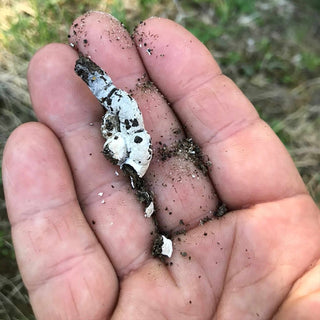
Human Tracking: Reading Human Presence in the Landscape
The weekend opens with a deep dive into the fundamental principles of human tracking, led by Kyt Lyn Walken, whose professional experience bridges tactical tracking, conservation work, and search applications.
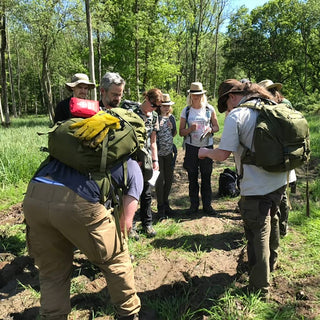
Through a blend of campfire-based theory sessions and intensive field practice, participants learn to:
- Identify and interpret human tracks
- Assess track aging and freshness
- Differentiate human sign from animal sign
- Understand how modern footwear alters track characteristics
The ancient art of mantracking has largely faded from modern awareness, yet it remains critically important in contexts such as search and rescue, missing person cases, anti-poaching operations, game rangering, and forensic reconstruction. Kyt brings this relevance to life, demonstrating how human sign reveals movement, intent, behaviour, and decision-making.
Participants explore how these skills integrate seamlessly into modern bushcraft practice, enhancing awareness, navigation, and understanding of human impact within wild spaces.
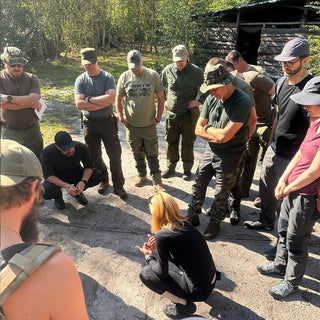
Developing the Tracker’s Eye
As the course progresses, participants investigate:
- The history of mantracking and its continued modern application
- Track traps and how to construct and interpret them
- Hostile and challenging tracking substrates
- Human gait analysis, pitch angles, stride measurement, and pressure release
Instruction includes the use of professional tracking kits, tracking sticks, and measurement techniques, demonstrating how astonishing amounts of information can be extracted from a single footprint.
Participants also undertake sensory development exercises, sharpening sight, hearing, and smell specifically for tracking. These awareness skills transfer directly into wildlife tracking, dramatically improving detection and interpretation ability.
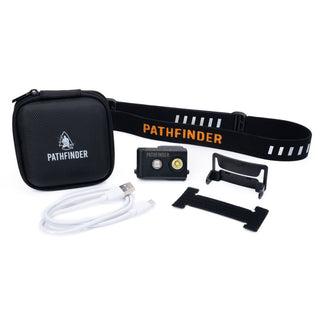
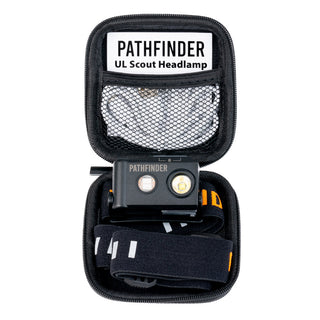
Light plays a critical role in tracking, and participants explore both natural and artificial light use, learning how angle, contrast, and shadow reveal detail invisible at first glance.
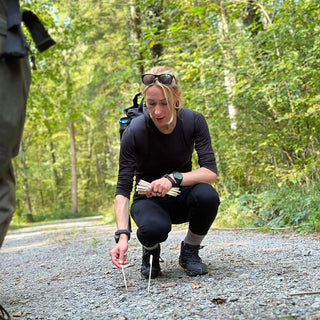
Animal Track and Sign: Wildlife in Context
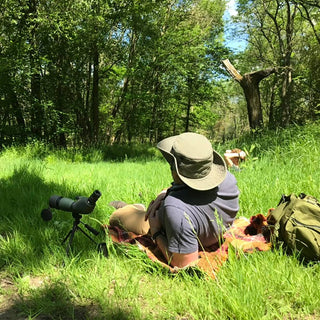
Alongside human tracking, Mark Sharwood guides participants through the interpretation of animal track and sign, drawing on knowledge developed through years of study, teaching, and expedition travel in the UK and overseas.
Participants learn to differentiate between species that often appear similar to the untrained eye. While no definitive species list is ever possible, the course commonly includes sign from:
- Deer species: Muntjac, Roe, and Fallow
- Mammals: Badger, Fox, Stoat, Weasel
- Birds: Pigeon, Robin, Jay, Tawny Owl
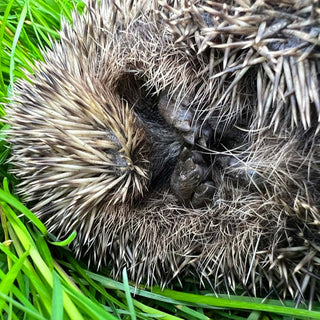
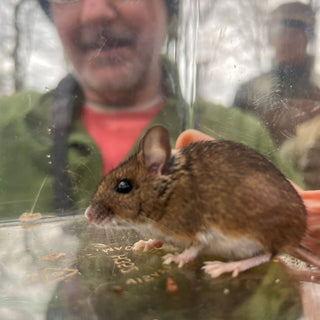
The group also investigates lesser-seen woodland mammals, using both live traps and ink traps in an attempt to capture evidence of mice and voles—providing valuable insight into species that are rarely observed directly.
Night Tracking and Perception
As darkness falls, the course takes on a new dimension. Night-time exercises explore tracking under reduced visibility, introducing participants to:
- Low-light observation techniques
- Changes in perception after dusk
- The Purkinje Effect and how colour and contrast shift at night
These sessions are often transformative, challenging reliance on vision alone and reinforcing the importance of multisensory awareness.
Fluid Learning, Real Progression
The course is intentionally fluid in structure, allowing instructors to respond to conditions, discoveries, and learning opportunities as they arise. In practice, participants can expect a dynamic rhythm across the weekend—moving between human tracking and animal tracking, theory and fieldwork, day and night exercises.
This approach mirrors real tracking practice, where adaptability and observation matter more than rigid schedules.
About Your Instructors
Kyt Lyn Walken
Kyt’s dedication to human tracking is rooted in continuous training and daily practice. Her experience includes:
- Tactical Acuity C-IED training (USA)
- Advanced tracking applications in Virginia, USA
- Mentorship under Mike Hull (Hull Tracking School)
- CYBERTRACKING animal tracking with Toni Romani
- Conservation Ranger work in Poland with C.R.O.W.
- Forensic photography training with former Royal Marines advisor Robert Kendall
She works internationally as a subcontracted instructor and is an external trainer for veteran search teams in the Netherlands.
Mark Sharwood
Mark qualified as a Woodland Ways instructor in 2019 following a two-year apprenticeship and extensive immersion through the Bushcraft Year and Woodland Wayer programmes.
His experience includes expeditions to the Sahara, Sweden, Kenya, the Amazon, and South Africa, alongside extensive solo travel and cultural immersion across Asia and Africa.
When not tracking or teaching, Mark enjoys running, martial arts, and traditional spoon carving.
What's Included
Meals provided:
- Saturday lunch (ploughman’s)
- Saturday evening meal (venison-based)
- Sunday breakfast (full fry-up)
- Sunday lunch (ploughman’s)
- Alternative dietary requirements catered for
Camping included for Friday (optional) and Saturday nights
- Access to private 250-acre woodland site
Participants need to bring:
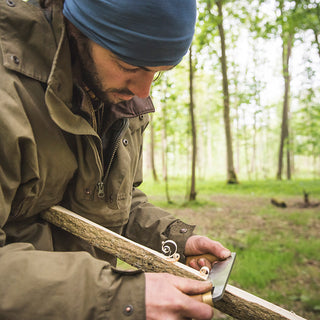
- Basic outdoor clothing
- Eating equipment
- Sleeping system
- Binoculars recommended (but not essential)
- A full kit list is available
In Summary
A Tracker's Odyssey: Bridging Wildlife and Human Sign is a rare opportunity to study human and animal tracking side by side, guided by two exceptional practitioners. Participants leave with sharpened perception, deeper understanding, and a genuinely transferable tracking skill set that enhances bushcraft, conservation work, and engagement with the natural world.
This is not simply a course—it is an invitation to begin thinking like a tracker.