
Few tools have shaped the human story as profoundly as the bow. From securing food in early hunter-gatherer societies to influencing the outcomes of historic conflicts, the bow represents a remarkable blend of material knowledge, skill, and intuition. Even today, the act of drawing a bow connects us directly to thousands of years of human ingenuity.
The Bow Making Bushcraft Weekend Course offers an opportunity to step into this tradition by crafting your own wooden bow using hand tools in a woodland setting. Whether your interest lies in ancient history, traditional craft, or the simple satisfaction of creating a functional tool from natural materials, this course provides a grounded and rewarding introduction to bow making.
Under the guidance of experienced instructors, participants are led through the complete process—from raw stave to finished bow—developing not only a working tool, but a deeper understanding of wood, balance, and patience. A selection of finished bows is available throughout the weekend to illustrate the diversity of traditional designs, allowing participants to choose a style ranging from Mesolithic flat bows to Medieval longbows.



OPTION 1:
Buy this course as a gift voucher for someone else. Valid for 18 months.
BUY GIFT VOUCHER
OPTION 2:
Choose the number of places, pay a deposit now and the balance 8 weeks before the course starts or pay in full now.
Select from the dates below.
Few tools have shaped the human story as profoundly as the bow. From securing food in early hunter-gatherer societies to influencing the outcomes of historic conflicts, the bow represents a remarkable blend of material knowledge, skill, and intuition. Even today, the act of drawing a bow connects us directly to thousands of years of human ingenuity.
The Bow Making Bushcraft Weekend Course offers an opportunity to step into this tradition by crafting your own wooden bow using hand tools in a woodland setting. Whether your interest lies in ancient history, traditional craft, or the simple satisfaction of creating a functional tool from natural materials, this course provides a grounded and rewarding introduction to bow making.
Under the guidance of experienced instructors, participants are led through the complete process—from raw stave to finished bow—developing not only a working tool, but a deeper understanding of wood, balance, and patience. A selection of finished bows is available throughout the weekend to illustrate the diversity of traditional designs, allowing participants to choose a style ranging from Mesolithic flat bows to Medieval longbows.
Bow Making Bushcraft Weekend Course
Bow Making Bushcraft Weekend Course
Bow Making Bushcraft Weekend Course
Bow Making Bushcraft Weekend Course
Bow Making Bushcraft Weekend Course
Bow Making Bushcraft Weekend Course
Bow Making Bushcraft Weekend Course
Bow Making Bushcraft Weekend Course
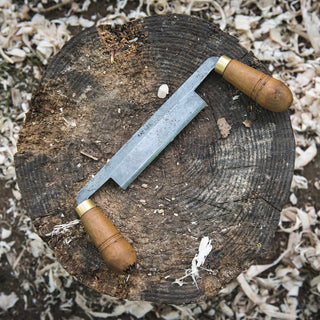
Friday – Foundations and Stave Preparation
The course begins on Friday afternoon with a comprehensive safety briefing and an introduction to the weekend’s structure. This is followed by a discussion exploring the evolution of bow design from prehistory to the present day, providing valuable context for the work ahead.
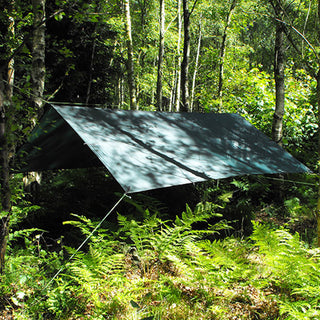
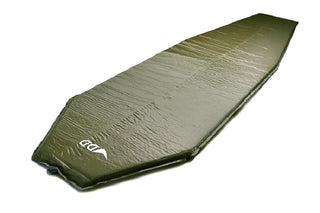
Participants then have time to set up their sleeping systems, familiarise themselves with the woodland site, and meet fellow bow makers. Instruction continues with a detailed overview of the tools used in bow making, covering safe handling and effective use.
Attention then turns to the wood itself. Instructors explain the properties of different bow woods, what makes them suitable, and how grain, growth, and character influence performance. Although each participant is provided with a suitable bow stave to begin work, the process of selecting a tree or limb, splitting it correctly, and assessing its potential is explained in full, ensuring understanding beyond the supplied materials.
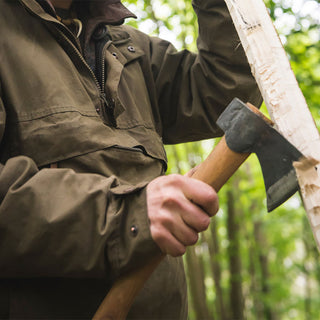
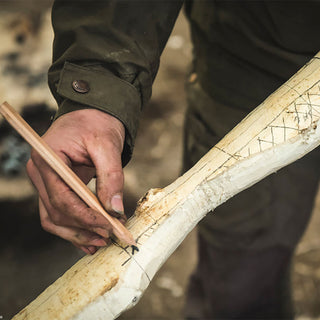
The practical work begins with the initial shaping of the stave. Participants are introduced to a range of methods, from the use of shave horses and draw knives to more primitive techniques, allowing each person to find a rhythm and approach that suits them.
The group breaks for an evening meal around 18:00, with the remainder of the evening spent relaxing around the campfire or continuing informal discussion about bow design and progress.
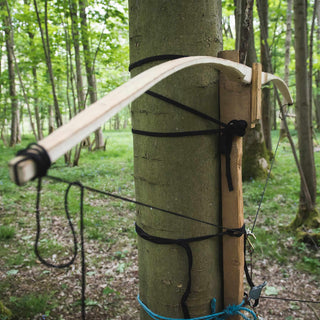
Saturday – Shaping and Tillering
Saturday is devoted to the heart of bow making: the tillering process. This is where the bow truly comes to life, as each limb is carefully adjusted to bend evenly and efficiently on either side of the handle.
Instructors provide close guidance throughout the day, helping participants read the wood, recognise uneven stress, and make precise adjustments. This stage demands patience and restraint, and many participants find it to be the most rewarding part of the process.
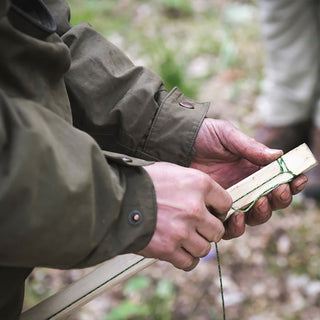
Once a bow reaches a workable tiller, attention turns to cutting string grooves and crafting a suitable bowstring, completing the functional system. Lunch is taken around 13:00, providing a well-earned break before returning to fine adjustments and refinement.
The day’s work concludes around 18:00, allowing time for cooking, rest, and informal discussion around the fire as bows continue to take shape.
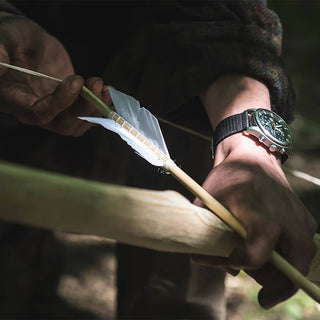
Sunday – Finishing and Shooting
Sunday morning focuses on completing the tillering process and ensuring each bow is working safely and effectively. Instruction covers finishing techniques, surface treatment, and bow aftercare, helping participants understand how to maintain and look after their bows over time.
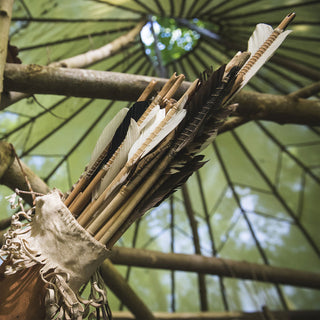
Once complete, participants have the opportunity to test their bows, shooting arrows at targets and experiencing the satisfaction of using a tool they have crafted entirely by hand.
The course draws to a close with time for questions, reflection, and discussion of next steps for those wishing to continue their bow-making journey.
Practical Information
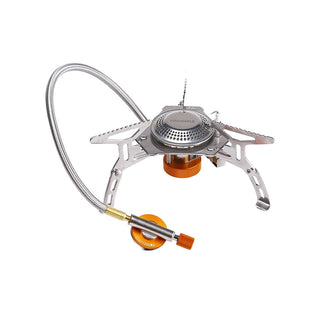
This is a self-catered course. Participants are required to bring their own food and cooking equipment for the duration of the weekend. Simple, quick-to-prepare meals are recommended to maximise time spent on the craft. Hot and cold drinking water will be available throughout.
In Summary
The Bow Making Bushcraft Weekend Course offers a thoughtful and hands-on introduction to one of humanity’s oldest crafts. Participants leave with a functional wooden bow, a solid grounding in traditional bow making techniques, and a deeper appreciation for the relationship between wood, tool, and maker.
For many, this weekend marks the beginning of a long and rewarding exploration into archery, woodland craft, and traditional skills.