

Our relationship with plants is ancient. Long before books, laboratories, or formal science, knowledge of plants—how to identify them, how to use them, and how to avoid their dangers—was essential to survival. This understanding was passed down through lived experience, season by season, generation by generation.
In the modern world, however, that constant exposure has largely been lost. Without repeated contact, plant identification becomes fragmented and difficult to retain. The Plant and Tree Identification 6 Weekend Immersion Course is designed to rebuild that relationship slowly, deeply, and with context—allowing knowledge to settle through time, observation, and repetition.
Rather than learning plants as isolated facts, you will come to know them as living beings within a dynamic landscape, shaped by season, environment, and relationship with other species.



OPTION 1:
Buy this course as a gift voucher for someone else. Valid for 18 months.
BUY GIFT VOUCHER
OPTION 2:
Choose the number of places, pay a deposit now and the balance 8 weeks before the course starts or pay in full now.
Select from the dates below.

Our relationship with plants is ancient. Long before books, laboratories, or formal science, knowledge of plants—how to identify them, how to use them, and how to avoid their dangers—was essential to survival. This understanding was passed down through lived experience, season by season, generation by generation.
In the modern world, however, that constant exposure has largely been lost. Without repeated contact, plant identification becomes fragmented and difficult to retain. The Plant and Tree Identification 6 Weekend Immersion Course is designed to rebuild that relationship slowly, deeply, and with context—allowing knowledge to settle through time, observation, and repetition.
Rather than learning plants as isolated facts, you will come to know them as living beings within a dynamic landscape, shaped by season, environment, and relationship with other species.
Plant and Tree Identification 6 Weekend Immersion Course
Expand your knowledge on what the natural world has to offer

An Immersive Woodland Experience
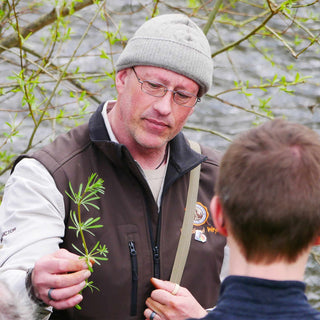
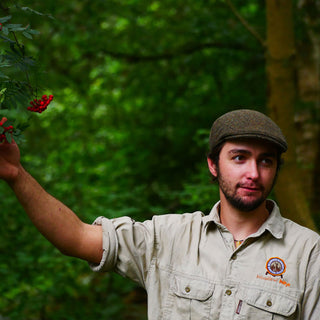
The course takes place within our 250-acre Oxfordshire woodland, a landscape rich in ecological diversity. Over the duration of the programme, you will witness how the woodland changes through the year and how those changes affect plant form, behaviour, and identification features.
As the weekends progress, participants consistently report a shift in perception: details once overlooked become obvious; patterns begin to emerge; cause and effect becomes visible. Identification moves from memorisation towards understanding.
Building Knowledge Through the Seasons
This course is structured around six weekends spread across the year, allowing you to observe plants and trees at every stage of their annual cycle. Each weekend builds on the last, reinforcing learning while introducing new layers of complexity.
Learning is guided by experienced Woodland Ways Instructors, combining practical field identification with discussion, comparison, and hands-on investigation.
Seasonal Focus Areas
Weekend 1 - Spring Greens
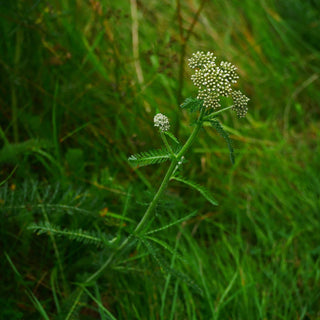
Early spring is one of the most challenging and rewarding times for plant identification. Young shoots and leaves are often at their most nutritious, yet many species have not fully developed the key characteristics that make identification straightforward.
During this weekend you will:
- Examine wild spring greens in their earliest stages
- Learn how to identify plants before flowers are present
- Study emerging wildflowers and their diagnostic features
- Begin creating your own herbarium, building a personal reference collection
- Observe how plants align with seasonal rhythms and environmental cues
Weekend 2 - Late Summer
By late summer, plants are fully developed and trees are in leaf, offering a different set of identification opportunities.
This weekend focuses on:
- Late-flowering plants and extended bloomers
- Leaf shape, arrangement, and crown structure in both native and non-native broadleaf trees
- Family-level identification traits
- Exploring the Doctrine of Signatures and its historical relevance to plant use
- Understanding how structure, habitat, and form relate to traditional applications
Weekend 3 - Fruits and Nuts
As plants shift energy toward reproduction, new identification features emerge.
This weekend explores:
- Early fruits and nuts and their diagnostic characteristics
- Changes in plant structure linked to reproduction
- Plant defence mechanisms and how these inform identification
- Strategies plants use to deter browsing and predation
- Recognising plant family groupings through fruit and seed structure
Weekend 4 - Entering Winter
As daylight fades, many plants withdraw above ground, revealing different aspects of their identity.
During this weekend you will:
- Study seeds and seed dispersal methods
- Identify plants from dead standing stems and remaining structures
- Examine root systems and underground strategies
- Understand how plants survive winter and prepare for renewal
Weekend 5 - Winter – Tree Identification
Winter is one of the most powerful times to learn tree identification, as reliance shifts away from leaves and flowers to subtler features.
This weekend includes:
- Detailed bud examination in deciduous trees
- Needle and cone identification in coniferous species
- Family characteristics and confusion species
- Tree diseases and symbiotic relationships, including fungi
- Sensorial tree identification, including night-time exercises
- Understanding growth regulators and how trees respond to environmental stress
Weekend 6 - First Signs of Spring
The final weekend brings the cycle full circle, as life begins to re-emerge.
This weekend consolidates learning while introducing formal frameworks that help structure long-term identification skills:
- Observing early spring wildflowers and new growth
- Safety and legality of examining wild plants
- Plant evolution: monocots and dicots
- Plant life cycles and growth strategies
- Flower types and plant structures
- Demystifying botanical terminology
- Flower anatomy and Latin name meanings
- Developing useful descriptive language
- Guidance on reference books and further study
In Summary
The Plant and Tree Identification Six-Weekend Immersion Course offers a rare opportunity to develop genuine, lasting identification skills through time, repetition, and deep engagement with the land. Participants leave not only with improved knowledge, but with a transformed way of seeing the natural world—one rooted in observation, curiosity, and seasonal awareness.
This course is ideal for those who want to move beyond quick-reference identification and build a meaningful, embodied understanding of plants and trees as living participants in a shared landscape.