
The Edged Tools and Spoon Carving Course offers a focused and rewarding introduction to the safe, confident use of traditional cutting tools within a woodland setting. Centered around the creation of a hand-carved wooden spoon, the course blends practical skill, material understanding, and thoughtful craftsmanship.
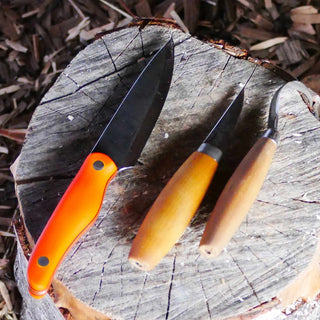
Participants are introduced to the axe, bushcraft knife, woodcarving knife, and crooked knife, learning how each tool is used effectively and safely. Rather than rushing to a finished product, the emphasis is placed on correct technique, body positioning, and control—skills that form the foundation of all successful woodcraft.
By the end of the day, participants leave with a functional spoon carved entirely by hand, alongside the confidence and understanding needed to continue carving independently.
All tools and materials are provided. Hot and cold water are available for drinks, and a base-camp style toilet is on site. This is a non-catered course, so participants should bring a packed lunch and snacks.


OPTION 1:
Buy this course as a gift voucher for someone else. Valid for 18 months.
BUY GIFT VOUCHER
OPTION 2:
Choose the number of places, pay a deposit now and the balance 8 weeks before the course starts or pay in full now.
Select from the dates below.
The Edged Tools and Spoon Carving Course offers a focused and rewarding introduction to the safe, confident use of traditional cutting tools within a woodland setting. Centered around the creation of a hand-carved wooden spoon, the course blends practical skill, material understanding, and thoughtful craftsmanship.
Participants are introduced to the axe, bushcraft knife, woodcarving knife, and crooked knife, learning how each tool is used effectively and safely. Rather than rushing to a finished product, the emphasis is placed on correct technique, body positioning, and control—skills that form the foundation of all successful woodcraft.
By the end of the day, participants leave with a functional spoon carved entirely by hand, alongside the confidence and understanding needed to continue carving independently.
All tools and materials are provided. Hot and cold water are available for drinks, and a base-camp style toilet is on site. This is a non-catered course, so participants should bring a packed lunch and snacks.
Edged Tools and Spoon Carving Course
Edged Tools and Spoon Carving Course
Edged Tools and Spoon Carving Course
Edged Tools and Spoon Carving Course
Edged Tools and Spoon Carving Course
Edged Tools and Spoon Carving Course
Arrival and Woodland Orientation
On arrival at the woodland camp, participants are welcomed by the instructional team and given a brief orientation to the site. A short walk through the woodland follows, allowing time to settle into the environment and begin observing it more closely.
During this walk, instructors introduce participants to a range of tree species, highlighting key identifying features and explaining how different woods behave when carved. Discussion covers grain structure, moisture content, strength, and suitability for specific carving projects. Sustainable harvesting methods are explained in detail, reinforcing responsible woodland practice.
This early session establishes an understanding that good carving begins long before a blade touches wood.
Morning – Tools, Safety, and Preparation
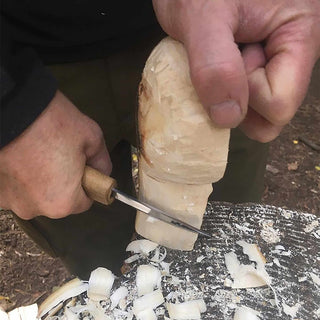
The morning focuses on tool introduction and safe use. Participants are guided through the correct handling of each edged tool, learning how grip, stance, and cutting angles affect both safety and efficiency.
Instruction includes:
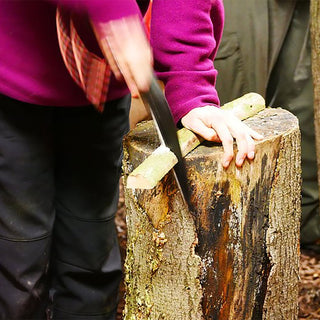
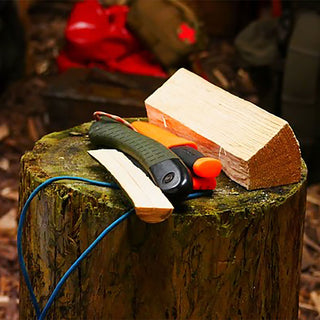
- Safe axe techniques for splitting and rough shaping
- Controlled knife cuts for shaping and refinement
- Introduction to the crooked knife for hollowing the spoon bowl
- Managing fatigue and maintaining focus during carving
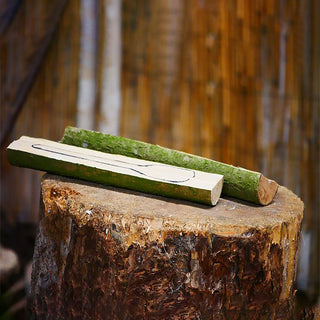
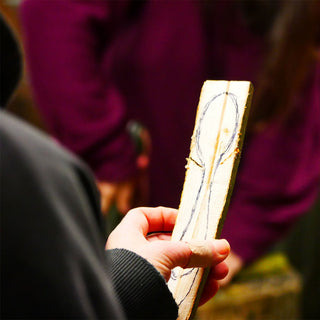
Participants then select suitable green wood and learn how to split and rough out a spoon blank, working with the grain rather than against it. This stage teaches participants how to remove material efficiently while preserving strength and balance.
Late Morning and Afternoon – Carving the Spoon
As the day progresses, attention turns fully to the spoon carving process. Participants work step by step through shaping the handle, refining the bowl, and developing a comfortable, functional form.
Instructors circulate throughout the group, offering individual guidance and helping participants adjust technique as needed. Emphasis is placed on developing a relaxed, methodical rhythm—allowing accuracy and control to emerge naturally.
As confidence grows, participants are encouraged to consider proportion, ergonomics, and finish, transforming a simple object into something personal and well-balanced.
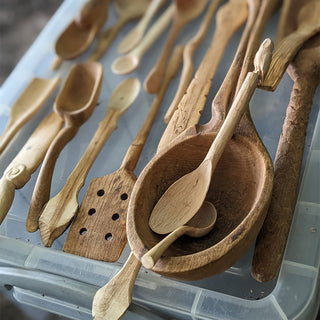
If time allows, additional carving projects may be introduced, such as long-handled spoons or spatulas, giving participants the opportunity to practise new skills and explore variations in design.
In Summary
The Edged Tools and Spoon Carving Course provides a strong foundation in both tool use and traditional woodcraft. Participants leave with a hand-carved spoon, practical experience of multiple edged tools, and the confidence to continue carving safely and independently.
More than producing an object, the day offers an introduction to a slower, more deliberate way of working—one that rewards patience, attention, and respect for both tool and material.