

The Wood Processing Course offers an in-depth, hands-on introduction to the practical skills required to turn standing and felled trees into usable, well-prepared material. Rooted firmly in traditional forestry practice, this course bridges the gap between bushcraft and woodland management, providing participants with the knowledge to work safely, efficiently, and thoughtfully with wood.
Led by instructors with professional forestry backgrounds, the day focuses on processing timber after felling—from snedding and sectioning to splitting, stacking, and seasoning. Rather than simply learning how to cut wood, participants develop an understanding of why different techniques are used, how tools interact with timber, and how to prepare wood appropriately for its intended purpose.
This course is equally valuable for bushcraft practitioners, instructors, and woodland owners, as well as anyone with an interest in managing small woodlands or producing their own firewood responsibly and safely.




OPTION 1:
Buy this course as a gift voucher for someone else. Valid for 18 months.
BUY GIFT VOUCHER
OPTION 2:
Choose the number of places, pay a deposit now and the balance 8 weeks before the course starts or pay in full now.
Select from the dates below.
The Wood Processing Course offers an in-depth, hands-on introduction to the practical skills required to turn standing and felled trees into usable, well-prepared material. Rooted firmly in traditional forestry practice, this course bridges the gap between bushcraft and woodland management, providing participants with the knowledge to work safely, efficiently, and thoughtfully with wood.
Led by instructors with professional forestry backgrounds, the day focuses on processing timber after felling—from snedding and sectioning to splitting, stacking, and seasoning. Rather than simply learning how to cut wood, participants develop an understanding of why different techniques are used, how tools interact with timber, and how to prepare wood appropriately for its intended purpose.
This course is equally valuable for bushcraft practitioners, instructors, and woodland owners, as well as anyone with an interest in managing small woodlands or producing their own firewood responsibly and safely.

Wood Processing Course
Wood Processing Course

Wood Processing Course
Wood Processing Course

Wood Processing Course
Wood Processing Course
Location and Arrival
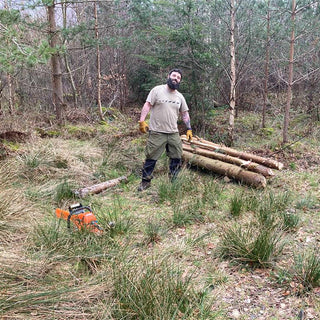
The course takes place in a working woodland near the village of Gifford in East Lothian, providing an authentic environment in which to learn real-world wood processing skills.
Participants meet the instructional team at the coffee shop on the village’s main street before travelling together a short distance into the woodland. This informal start allows time for introductions, discussion of the day’s structure, and an overview of safety considerations before work begins.
Morning – Tools, Timber, and Firewood Processing
The morning session begins with a detailed introduction to the cutting and processing tools used throughout the day. Participants are guided through axes, hatchets, splitting mauls, and a range of saws, learning how each tool differs and how to select the most appropriate tool for specific tasks.
Instruction covers:
- Tool design and function
- Safe handling and working positions
- Matching tool choice to timber size and species
- Managing fatigue and maintaining efficiency
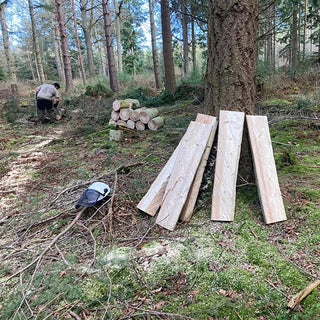
Participants then move on to practical work, developing skills in snedding, bucking, splitting, and stacking firewood of various grades. Emphasis is placed on safe technique, body mechanics, and working rhythm—ensuring that tasks are completed effectively without unnecessary strain.
Alongside this, instructors guide participants through tree and wood identification, exploring how different species behave when cut and split, and how these characteristics affect their suitability for firewood or other uses. Discussion includes the burning properties of various woods, such as heat output, burn duration, and seasoning requirements.
Afternoon – Seasoning, Storage, and Tool Care
A pause is taken for a self-catered packed lunch, allowing time to rest, reflect, and discuss the morning’s work. This is a non-catered course, so participants should bring their own food and drinks. The woodland setting provides a relaxed and informal space to recharge before the afternoon session.
The afternoon builds on the skills developed earlier in the day, introducing participants to effective firewood stacking and storage techniques. Instructors demonstrate a range of methods used across the Northern Hemisphere, explaining how airflow, ground contact, and structure influence seasoning.
Participants explore:
- How to stack wood to encourage drying rather than rot
- The advantages and disadvantages of different stacking styles
- Seasonal considerations and long-term storage
The day concludes with a detailed session on tool maintenance and care. Participants learn how to clean, inspect, sharpen, and store tools after a day’s work, ensuring longevity and reliability.
This session also covers biosecurity considerations, including how pests, disease, and contaminants can be transferred between woodland sites on tools and equipment, and how these risks can be mitigated responsibly.
In Summary
The Wood Processing Course provides a solid foundation in traditional and practical timber processing skills. Participants leave with a deeper understanding of how to work safely and efficiently with wood, how to prepare timber for use, and how to care for both tools and woodland environments.
This course is ideal for those looking to expand their bushcraft skill set, manage their own woodland resources, or gain confidence in producing and handling firewood correctly and sustainably.