
The Woodland Ways Advanced Bushcraft Weekend is designed for those ready to move beyond foundational skills and begin working with the woodland as a complete system. Drawing on key elements from our award-winning Woodland Ways Bushcraft Weekend, this course revisits familiar skills in greater depth while introducing new craft disciplines that broaden understanding and capability.
This weekend places strong emphasis on self-reliance, collaboration, and thoughtful practice. Participants live and work as a small group, constructing shelter, preparing food over fire, and crafting functional items entirely by hand. While no prior experience is strictly required, this course is ideally suited to those who have attended our Bushcraft Fundamentals or Bushcraft Weekend and wish to consolidate and extend their learning.
Throughout the weekend, highly experienced instructors offer detailed guidance, encouraging participants not just to follow instruction, but to understand why techniques work and how they can be adapted to different situations.

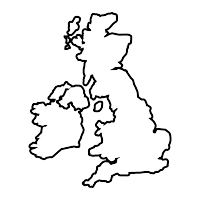


This course runs in Oxfordshire and East Lothian
OPTION 1:
Buy this course as a gift voucher for someone else. Valid for 18 months.
BUY GIFT VOUCHER
OPTION 2:
Choose the number of places, pay a deposit now and the balance 8 weeks before the course starts or pay in full now.
Select from the dates below.
The Woodland Ways Advanced Bushcraft Weekend is designed for those ready to move beyond foundational skills and begin working with the woodland as a complete system. Drawing on key elements from our award-winning Woodland Ways Bushcraft Weekend, this course revisits familiar skills in greater depth while introducing new craft disciplines that broaden understanding and capability.
This weekend places strong emphasis on self-reliance, collaboration, and thoughtful practice. Participants live and work as a small group, constructing shelter, preparing food over fire, and crafting functional items entirely by hand. While no prior experience is strictly required, this course is ideally suited to those who have attended our Bushcraft Fundamentals or Bushcraft Weekend and wish to consolidate and extend their learning.
Throughout the weekend, highly experienced instructors offer detailed guidance, encouraging participants not just to follow instruction, but to understand why techniques work and how they can be adapted to different situations.
Woodland Ways Advanced Bushcraft Weekend
Woodland Ways Advanced Bushcraft Weekend
Woodland Ways Advanced Bushcraft Weekend
Woodland Ways Advanced Bushcraft Weekend
Woodland Ways Advanced Bushcraft Weekend
Woodland Ways Advanced Bushcraft Weekend
Woodland Ways Advanced Bushcraft Weekend
Woodland Ways Advanced Bushcraft Weekend
Friday – Tools, Timber, and Campcraft Foundations
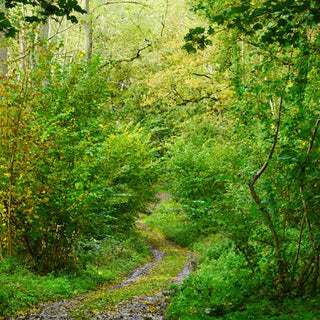
On Friday afternoon, participants are welcomed by the instructional team before making a short walk into a fixed, expedition-style woodland camp. Once settled, an orientation to the site and facilities provides a calm and purposeful start to the weekend.
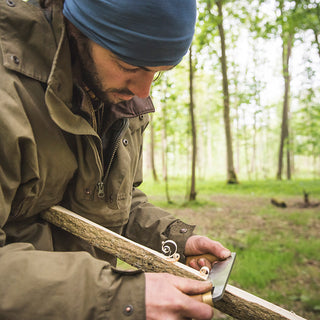
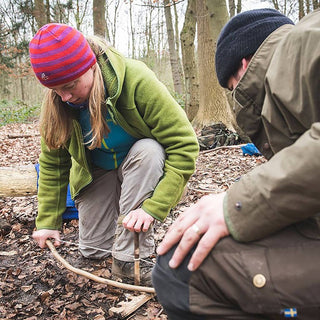
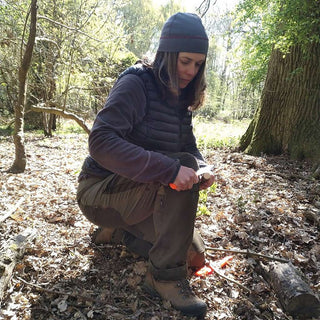
Instruction begins with an introduction to the primary tools used throughout the course—knife and saw—with a focus on safe handling, efficiency, and precision. Participants then learn how to split, shave, and carve green wood, putting these skills immediately into practice by crafting their own wooden tent pegs.
Alongside this work, participants begin carving a wooden spoon, learning how to read the grain, remove material efficiently, and shape a functional utensil that balances strength and elegance. This project continues across the weekend, allowing time for refinement and finishing.
As the afternoon progresses, instructors demonstrate a selection of reliable knots and tarp setups, showing how cordage and pegs work together to create a secure and adaptable shelter system.
The evening is spent around the fire enjoying a hearty pheasant casserole, while participants continue carving, sharing conversation, and settling into the woodland rhythm.
Saturday – Shelter, Fire, and Woodland Living
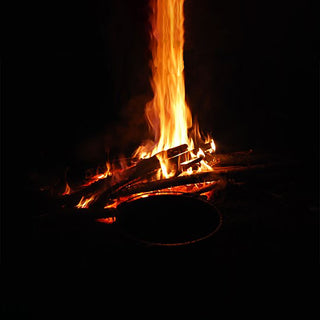
Saturday begins with participants preparing their own campfire breakfast, cooking damper bread, bacon, and traditional campfire coffee over open flame—an early lesson in timing, fire control, and efficiency.
The morning is devoted to group shelter construction, working collaboratively to build a large, comfortable structure centred around a fire. As the shelter takes shape, attention turns to constructing a robust cooking rig, enabling safe and effective fire-based food preparation.
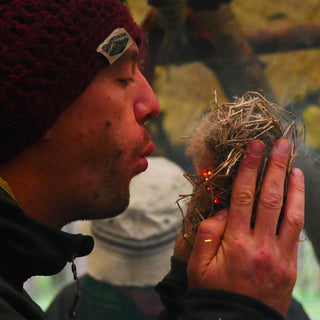
After a buffet-style lunch, participants are guided through the process of collecting and preparing materials to create a group fire bow set. Once complete, the group uses this set to ignite the central shelter fire—bringing together material knowledge, teamwork, and technique.
With shelter, fire, and cooking systems established, focus shifts to game preparation, with instructors guiding participants through the practical and ethical considerations involved.
Throughout the day, time is set aside to return to spoon carving, allowing participants to complete and refine their utensils ready for use that evening.
Later in the afternoon, participants head into the surrounding woodland to collect seasonal wild ingredients, learning how to identify, harvest, and use them responsibly. These are incorporated into the evening meal and brewed into a warming wild tea. Along the way, instructors highlight signs of wildlife, plant relationships, and the broader ecology of the woodland.
As dusk falls, the group returns to camp to enjoy a meal cooked over the fire, before settling in for a night’s sleep within the shelter they have built together.

Sunday – Basketry and Completion
Sunday morning begins with a simple but nourishing breakfast before turning attention to the final craft of the weekend: traditional round wicker basketry.
Participants are guided step by step through the process of selecting materials, forming the base, building the sides, and finishing the rim. This session introduces key basketry techniques while allowing enough time for each participant to complete a functional basket to take home.
As the course draws to a close, participants pack away their newly crafted baskets—now containing their hand-carved spoon and tent pegs—bringing the weekend’s journey full circle.
In Summary
The Woodland Ways Advanced Bushcraft Weekend offers a rich and immersive experience that weaves together shelter building, firecraft, food preparation, and traditional woodland crafts. Participants leave with a deeper confidence in their abilities, a stronger connection to the natural world, and a collection of practical items made by their own hands.
This course is ideal for those who wish to slow down, deepen their understanding, and live well in the woodland, guided by experience, tradition, and thoughtful practice.