
The Sahara has challenged and inspired travellers for thousands of years. Vast, silent, and constantly changing, it is a landscape that reveals its true character only to those willing to slow down, observe, and understand it. This expedition has been designed to do exactly that.
More than simply crossing the desert, the Woodland Ways Sahara Desert Expedition is a professionally led journey into its landscapes, cultures, and traditions. Blending cultural immersion, refined instruction, and genuine expedition travel, it offers the rare opportunity to experience one of the world's most remarkable environments with depth, authenticity, and purpose. Throughout the expedition, you will develop not only the practical skills to travel safely and confidently in the desert, but also a deeper appreciation of the people, history, and natural processes that have shaped this extraordinary place for millennia.
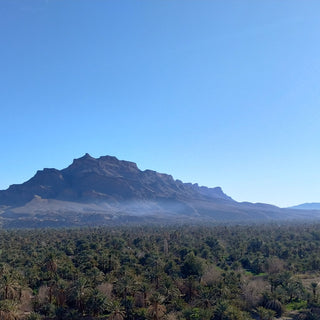
Your journey begins in the vibrant heart of Marrakech, where colour, sound, and movement create a striking contrast to the silence and scale of the desert that lies ahead. From here, the expedition progresses through ancient kasbahs, remote villages, historic oases, and iconic film locations before crossing the Atlas Mountains and descending into the vast dune systems of the Sahara. This route follows terrain made famous by the Paris–Dakar Rally, revealing landscapes of extraordinary scale and raw beauty.
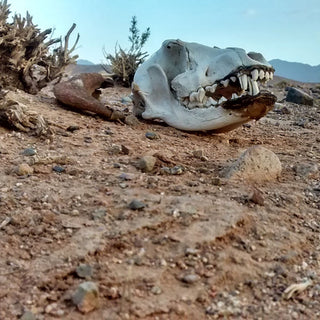
In the desert, conditions are uncompromising. Daytime temperatures may exceed 50°C, while night-time temperatures can drop by more than 30°C. Yet within this apparent hostility lies remarkable calm and clarity. With the correct knowledge, preparation, and leadership, the Sahara becomes not only manageable, but profoundly rewarding.
Our instructor team have several decades of combined experience operating in desert environments across Morocco, Egypt, and Saudi Arabia. Their expertise ensures that learning is grounded in reality, not theory, and that participants are supported by professionals who understand both the risks and the subtleties of desert travel.




1. Choose the number of places you want to book.
2. Choose to pay a deposit or the full amount.
The balance payment is required no less than 8 weeks before your course commences. You will receive an invoice shortly after booking for the balance payment.
Please pay in full if the course start date falls within that period.
3. Click ’Next’ and complete the attendee details for each place you have booked.
The Sahara has challenged and inspired travellers for thousands of years. Vast, silent, and constantly changing, it is a landscape that reveals its true character only to those willing to slow down, observe, and understand it. This expedition has been designed to do exactly that.
More than simply crossing the desert, the Woodland Ways Sahara Desert Expedition is a professionally led journey into its landscapes, cultures, and traditions. Blending cultural immersion, refined instruction, and genuine expedition travel, it offers the rare opportunity to experience one of the world's most remarkable environments with depth, authenticity, and purpose. Throughout the expedition, you will develop not only the practical skills to travel safely and confidently in the desert, but also a deeper appreciation of the people, history, and natural processes that have shaped this extraordinary place for millennia.
Your journey begins in the vibrant heart of Marrakech, where colour, sound, and movement create a striking contrast to the silence and scale of the desert that lies ahead. From here, the expedition progresses through ancient kasbahs, remote villages, historic oases, and iconic film locations before crossing the Atlas Mountains and descending into the vast dune systems of the Sahara. This route follows terrain made famous by the Paris–Dakar Rally, revealing landscapes of extraordinary scale and raw beauty.
In the desert, conditions are uncompromising. Daytime temperatures may exceed 50°C, while night-time temperatures can drop by more than 30°C. Yet within this apparent hostility lies remarkable calm and clarity. With the correct knowledge, preparation, and leadership, the Sahara becomes not only manageable, but profoundly rewarding.
Our instructor team have several decades of combined experience operating in desert environments across Morocco, Egypt, and Saudi Arabia. Their expertise ensures that learning is grounded in reality, not theory, and that participants are supported by professionals who understand both the risks and the subtleties of desert travel.

Sahara Desert Survival Expedition
Sahara Desert Survival Expedition

Sahara Desert Survival Expedition
Sahara Desert Survival Expedition

Sahara Desert Survival Expedition
Sahara Desert Survival Expedition
Arrival & Cultural Context
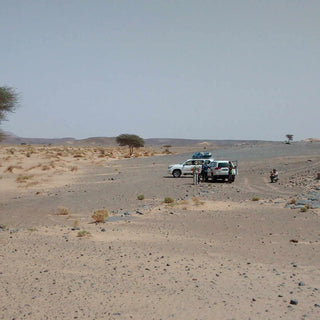
Upon arrival at the airport, you will be met by our instructors and trusted in‑country partners before being transferred to the centre of Marrakech for the first night. This initial phase is an intentional and valuable component of the expedition.
Time spent in the city introduces participants to the challenges of operating in an unfamiliar urban environment—navigating sensory overload, cultural differences, and situational awareness. Instructors conduct comprehensive briefings and begin preparing the group mentally, practically, and logistically for the transition away from civilisation.
During this early phase, you are introduced to the distinctive mapping systems used in desert regions, pacing techniques for distance measurement, and methods of creating navigational reference points in feature‑poor terrain. Natural navigation is introduced early, forming a foundation that will be reinforced throughout the expedition.
The Journey into the Desert
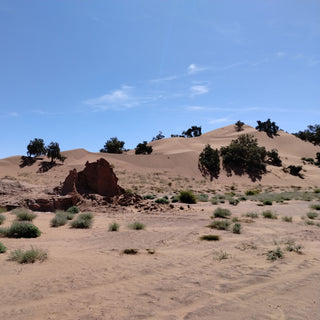
With modern infrastructure left behind, the expedition moves steadily deeper into the Sahara. As the terrain opens up, the rhythm of daily life changes. Movement becomes deliberate, decision‑making measured, and efficiency essential.
Encounters with semi‑nomadic communities are possible—people whose relationship with the desert offers invaluable insight into long‑term adaptation and resilience in extreme environments.
Each day introduces new skills and responsibilities. Mornings begin with disciplined routines such as the essential ‘scorpion drills’, ensuring camps are broken down safely and methodically. As temperatures rise, energy management, hydration strategy, and situational awareness become critical considerations.
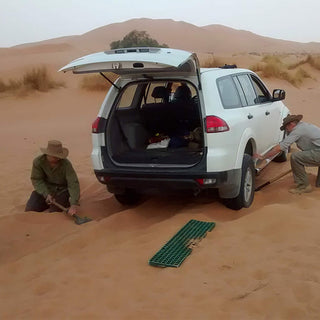
Participants progressively develop confidence in desert driving techniques, terrain reading, and vehicle handling. Recovery techniques and signalling methods are practised in carefully managed scenarios, reinforcing calm problem‑solving under pressure. The expedition deliberately avoids reliance on heavily modified vehicles, demonstrating instead how knowledge, planning, and restraint are the true foundations of safe overland travel.
As daylight fades, the desert transforms. With minimal light pollution, the night sky reveals itself in extraordinary clarity—a vast, humbling display that few environments on Earth can rival.
Adaptation & Applied Learning
True expeditions do not adhere to rigid itineraries. Conditions, weather, and terrain dictate decision‑making, and adaptability is a core skill developed throughout the journey.
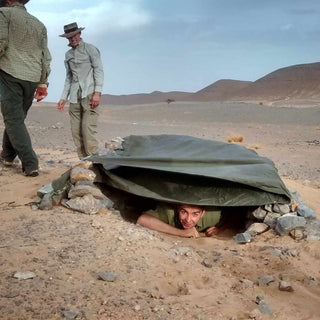
Participants may construct sand graves and, should conditions permit, experience their effectiveness during sandstorms. Fire‑lighting using scarce desert resources—including camel dung—is explored as a practical and instructive skill rather than a novelty. Over time, desert routines become instinctive and the group evolves into a cohesive, responsive unit.
Water acquisition methods are tested against reality, allowing participants to critically assess what works in genuine desert conditions. The expedition provides first‑hand exposure to how rapidly environments can change—from disorientating sandstorms to flash floods that reshape the landscape in minutes.
Skills Developed
While no two expeditions are identical, the Sahara demands mastery of core expedition skills. These are introduced progressively, practised repeatedly, and reinforced under expert supervision.
Participants will develop insight into:
- Urban environment awareness – operating safely and confidently in unfamiliar cities
- Water procurement and management – locating, collecting, filtering, and purifying water in arid regions
- Shelter systems – managing shade, airflow, and extreme temperature variation
- Environmental adaptation – mitigating the effects of heat stress and dehydration
- Off‑road driving – terrain reading, vehicle positioning, momentum, and gear selection
- Vehicle recovery – using specialist equipment and improvised solutions
- Catastrophic vehicle failure – resource management when mobility is lost
- Signalling techniques – attracting attention across vast distances
- Navigation – desert map reading, compass work, natural navigation, and distance tracking
- Night sky – celestial navigation and folklore beneath some of the darkest skies on Earth
A Return to Civilisation
The expedition concludes with a return to Marrakech and a celebratory meal in the heart of the city—a deliberate re‑entry into modern life that highlights the contrast between urban intensity and desert stillness.
The Sahara Desert Expedition is demanding, immersive, and deeply rewarding. It is not an endurance exercise, but an opportunity to develop genuine capability in one of the world’s most extreme environments, guided by instructors whose experience inspires trust and confidence.
Few journeys offer such perspective, humility, and clarity. Fewer still leave participants changed in the way this expedition does.
Safety & Professional Standards
All Woodland Ways expeditions operate in accordance with The Package Travel and Linked Travel Arrangements Regulations 2018, ensuring financial protection where applicable. Overseas expeditions are aligned with the British Safety Standard BS8848, reflecting our commitment to rigorous planning, risk management, and professional delivery.
Expeditions into extreme environments require experience, preparation, and accountability. Woodland Ways and our trusted partners are long‑established, highly regarded, and operate to exacting professional standards. We welcome informed questions and are confident in the systems in place to support you throughout this exceptional expedition.